
Learning Hub
- Home
- Bridges & Box Culverts
Bridges & Box Culverts
Bridges & Box / Pipe Culverts — Asset Life & Fitness-for-Purpose
Takeaway: Cross-drainage assets must be both structurally sound and hydraulically adequate. Condition is driven by fatigue/ageing, traffic loading, moisture and climate; service risk is driven by conveyance capacity, blockage/scour and overtopping consequence. We size for hydraulic adequacy to protect the major road asset.
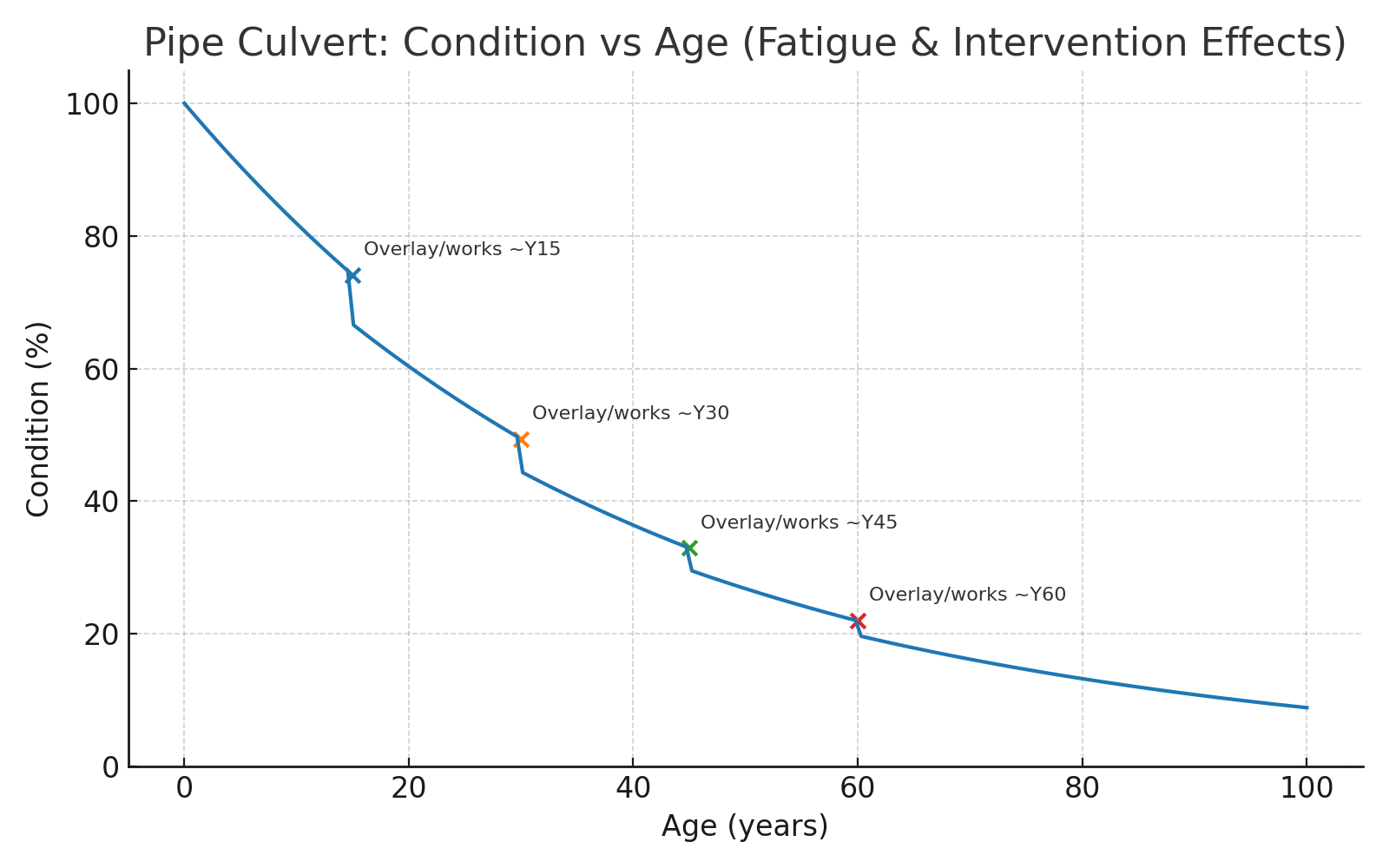
- Pipe culverts: Repeated overlays, trenching near barrels, and heavy-vehicle fatigue cycles reduce ring stiffness and bedding support over time. Condition typically declines faster than boxes if bedding/compaction is poor.
- Box culverts: Slower structural decay, but joints, differential settlement, and scour drive step changes in condition late in life.
- Hydraulic adequacy: Councils often focus on structural condition and overlook conveyance. Every cross-drainage structure should be checked against target ARI/depth–velocity limits to avoid road overtopping, embankment damage and safety risks.
- Bridges: Require monitoring with clear triggers: routine inspections, detailed assessment (load rating/fatigue), and end-of-life planning.
Routine maintenance & climate: Debris clearing, apron/wingwall repairs, shoulder grading, and scour protection reduce blockage and moisture attack; wet–dry and flood cycles accelerate deterioration if drainage is poor.
Hydraulic Check ,Scour & Blockage, Fatigue, Inspection Triggers